 This landmark served as the beginning of the city of Elisavetgrad, so it can be called one of the most important, especially revered by residents and most visited by tourists.
Fortress, or as it was originally called — Fort St. Elizabeth was named in honor of the Christian saint — the mother of John the Baptist. Its foundation dates back to 1754-1760, and the date of foundation — June 18, 1754, is considered the birth date of the city.
The fortress in the interfluve of Sugoklei and Ingul was decided to build in order to create an outpost of the Russian Empire in the Dnieper region, to repel attacks of Tatars, Turks and other conquerors. From here the Russian Empire began its access to the Black Sea. Significant for the history of the fortress is the fact that it was from here that the hundred-thousand-strong Russian army that defeated the Zaporizhian Sich moved out.
But not only military victories made this landmark famous — the erected fortification was recognized as a masterpiece of fortification architecture. According to the project of architect Vista, under the guidance of engineer-colonel Menzelius was erected an unusual structure that resembled in shape a six-rayed star with protruding ramparts and bastions. 6 ravelins and 6 bastions constituted the main power of the structure surrounded by a moat filled with water. Three towers were erected in the fortress, which were equipped with heavy artillery, in total there were more than a thousand guns brought from warships and canceled fortifications. It was possible to enter the fortress from three gates: Vsesvyatskiye and Trinity gates, located on the present places of entrances, and Vozdvizhenskiye. The earth ramparts that reliably protected the fortification were crowned by a high impregnable wooden wall.
The beautifully fortified Fort of St. Elizabeth played a key role in the Russian-Turkish war, and in 1769 the fortress withstood the siege of Kerim-Girey’s troops — the Crimean khan.
The construction of the fortification on an important trade route was the beginning of the settlement of the territory of the future Kirovograd region.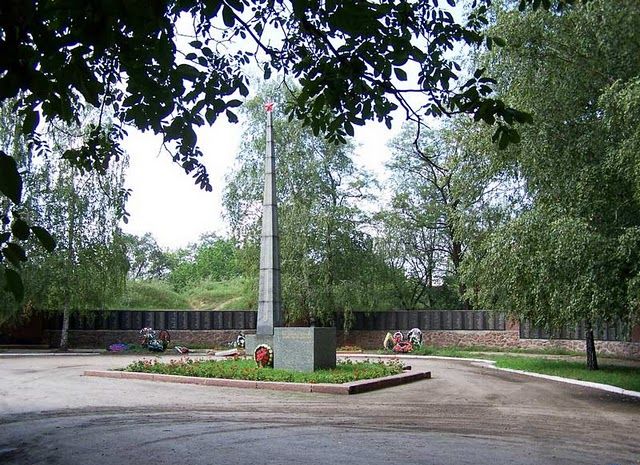 The military decision, as it often happens, gave birth to the whole city and even the region. The abolition of the fortress of St. Elizabeth as a military fortification, which happened because of the expansion of the borders of the Russian Empire to the South according to the Treaty of Kuchuk-Kainardzhi, led to the fact that the fort received the status of an «inner city», and in 1805 it was completely abolished.
The former scale of the fortress — the territory of the fortification was 57 hectares — can be judged even today by the preserved earth ramparts. A part of the economic buildings of the XVIII century — houses for officers, barracks for soldiers, a blacksmith shop and other buildings for economic purposes, today they house the city hospital. As in the XVIII century, today the entrance to the territory is guarded by two cannons.
Every tourist coming to Kirovograd must go to this almost sacred place. A visit to this attraction of Kirovohrad gives an opportunity to get acquainted with its history, to touch the times when the present Ukraine was just beginning its first steps towards its formation.
To visit this amazing historical place will be interesting to every person who is not indifferent to the past and seeks to learn its mysteries and secrets, to feel the unique atmosphere of historical places. There is a legend that somewhere on the territory of the former fortress of St. Elizabeth buried treasures, but whether it is so, so far no one has not found out.