Askania Nova Biosphere Reserve named after Friedrich Eduardovich Faltz-Fein — the oldest steppe reserve in the world, one of the 7 natural wonders of Ukraine, one of the hundred most famous protected areas of the planet, has already celebrated its centennial.
The history of reserve formation in Askania Nova began in the second half of the XIX century, when the young Friedrich Eduardovich Faltz-Fein (1863-1920), a descendant of German colonists who developed the southern Ukrainian steppes and owned this territory, began to create the first aviaries for birds and animals. Friedrich’s childhood hobby soon became his life’s work, to which he remained faithful until the end of his days. Already by the early 80-ies of the XIX century, the news of an unusual zoo with semi-wild confinement of animals in the waterless steppes of the Tauride province spread throughout Europe. It surprised not only by its scale, but also by the fact that here appeared saigas and Przewalski’s horse, unusual for European zoos, 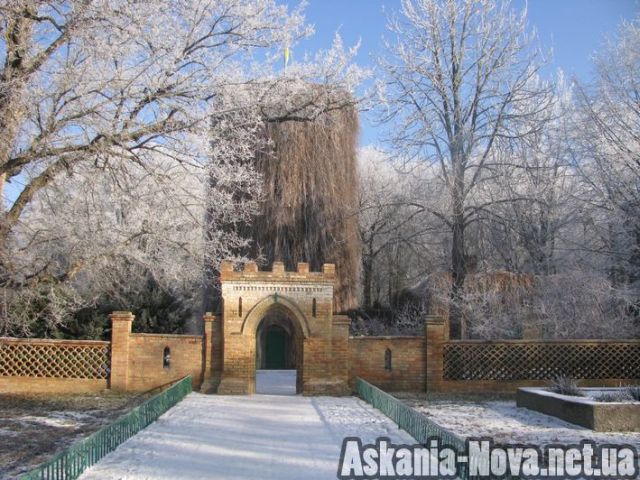 ostriches nested in a large steppe aviary, antelopes, zebras and other exotic species of ungulates grazed here.
The founder of the steppe oasis initially set a high nature protection bar, which he overcame with a reserve of at least a hundred years. Following the zoo from 1887 to 1902, he laid the dendrological park on artificial irrigation, and in 1898 he reserved for eternal times the area of tipchakovo-kovyl steppe. As scientific sources reliably testify, by 1898 in Askania Nova F. Faltz-Fein had created a nature protection structure similar to the one that was adopted as the basis of the biosphere reserve by the decision of the UNESCO session only in 1972. Neither wars, nor revolutions, nor the mighty march of socialist transformations and «victories» over nature could break the conservation spirit laid down by the founder. In 1919 the Reserve was nationalized.
It was transformed, renamed, turning it into a center of hybridization and acclimatization of animals, or into an institute of livestock breeding of steppe areas, but always remained protected objects: a zoo, an arboretum and a protected steppe. Over Askania hangs the sign of the mighty first-born of the reserve business, which continues to grow over the years, gaining power with each successive generation of nature researchers. If at the time of the founder the area of the zoo was about 100 hectares, now the animals live in semi-voluntary regime on the area of 2330 hectares, the dendrological park from 28 hectares has grown to 167 hectares, and the area of the protected steppe has increased from 600 hectares to 11054 hectares. In 1985 the Askania Nova Reserve was included in the list of reference areas of the planet by the decision of the UNESCO Office and is a biosphere reserve. Its current area is 33.3 thousand hectares, includes the protected steppe (core), buffer zone and zone of anthropogenic landscapes and is rightfully the oldest steppe biosphere reserve of the planet and the largest among European steppe protected areas.
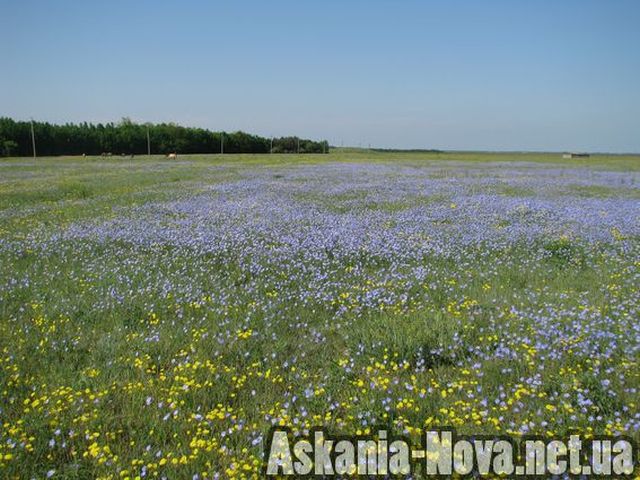
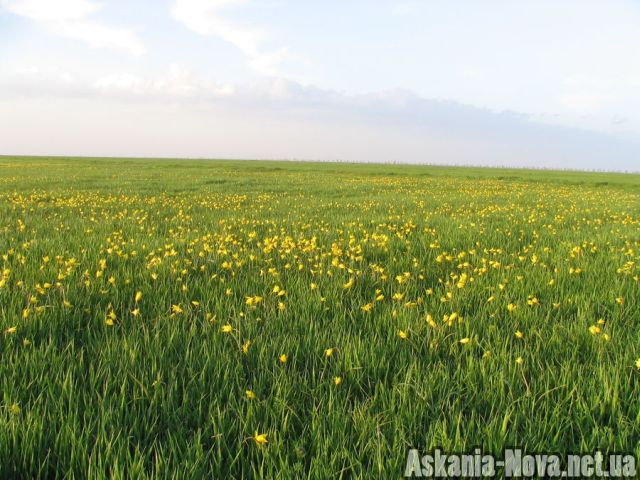
The biological diversity of steppe ecosystems includes more than 500 species of higher plants and more than 3000 species of animals. Many species that have disappeared over the last two centuries in the vast areas of former Eurasian steppes, continue to exist here as common: Ukrainian, Lessing’s, hairy, Scythian and Shrenk’s tulips, Sarmatian Bellevalia, Regel’s onion, Taliev’s cornflower, Chastukhovid starflower and others. During the warm period of the year steppe grass species change the appearance of the landscape with a colorful carousel. Depending on the dominance of flowering species in the grass, it acquires emerald green, blue, lilac, yellow, silver and other colors. Carpets of natural colors replace each other until mid-June, after which the steppe falls into a pause of rest until September.
Aboriginal fauna is adapted to living in a dry hot climate. The song of steppe, field and gray skylarks, quail, meadow harriers and steppe buzzards soar over the steppe all day long.
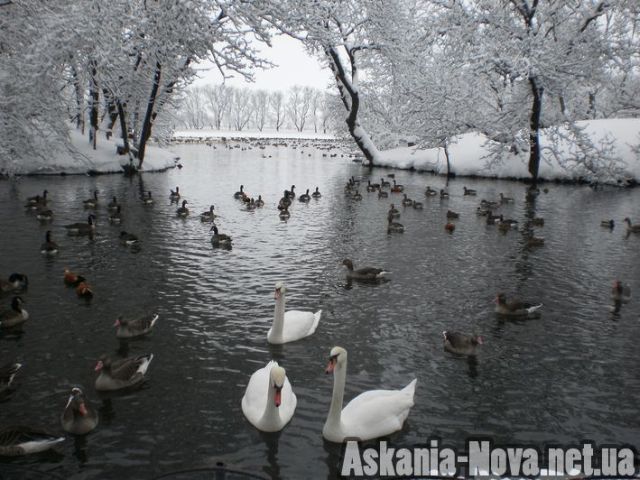
The Azov-Black Sea migration corridor has been passing through the present territory of the reserve for centuries, which annually moves more than 250 species of birds alone, in dozens or in huge aggregations of 40, 150 and even up to 500 thousand individuals. The presence of a permanent body of water in the center of the protected area — the Big Chapelskiy pod, which attracts huge concentrations of migrating waterfowl, became the basis for including this area in the List of Wetlands of International Importance. Askania Nova is one of the main points in the Northern Black Sea coast for spring and fall aggregations of the gray crane — up to 44 thousand individuals, wintering grounds of the bustard — up to 2500 individuals, red-breasted goose — up to 12 thousand, white-fronted goose, mallard and many other species.
Among mammals, the steppe is permanently inhabited by badger, fox, wolf, russak hare, and many representatives of the rodent group.
The reptiles include a number of rare species: Sarmatian poloz, steppe viper, copperhead. In general, the fauna of the protected area includes 69 species listed in the Red Book of Ukraine, 295 protected under the Bern Convention, 104 under the Bonn Convention, 12 listed in the European Red List.
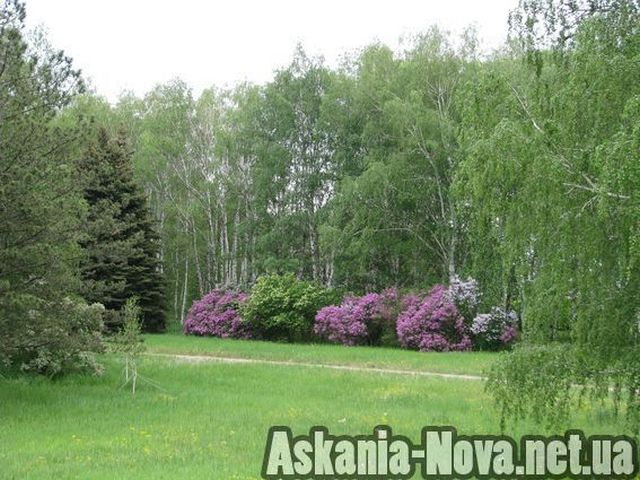
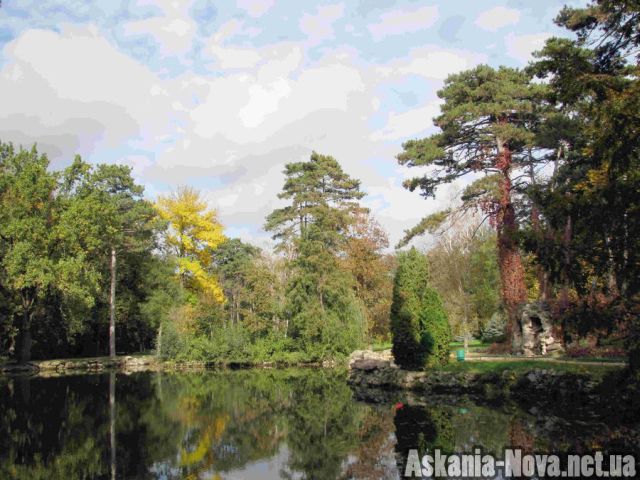
Askania Nova is rightfully called a man-made oasis in the steppe, because since the end of the nineteenth century there is a dendrological park, irrigated by artesian waters. The water of the Pont-Meotis-versus-Sarmatian horizon flows by ditches under each plant, giving life to 1030 taxa of woody plants and more than 680 species of herbaceous plants. It is the largest dendrological park of the steppe zone of Ukraine, having the status of the national park since 1983. There are 73 species of plants listed in the Red Book of Ukraine and about 100 species rare for Eurasia.
The plants introduced here now green many parks and squares of subarid regions not only in Ukraine, and scientific connections of the laboratory of the dendropark cover 4 continents.
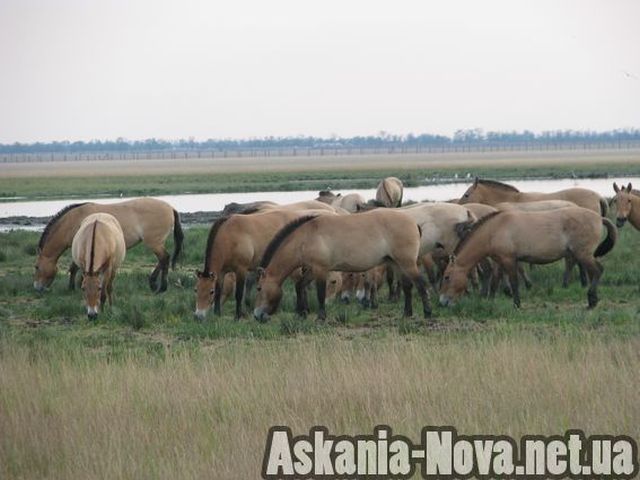
The Falz-Feinov tradition of breeding zoo animals on large spaces in herds, flocks, shoals, gurts was further developed. Askania Zoo with semi-wild keeping of animals remained for a long time one of the largest parks in the world, as well as the center of scientific developments on their conservation and return to the wild. Askania Nova has made a major contribution to the preservation of the rarest species — Przewalski’s horse, whose appearance in Europe from Mongolia began in 1899 from here. In 1992, after a long absence from the wild, the species was successfully returned from Askania-Nova and Holland to the Khustan-Nuru reserve near Ulaanbaatar. In Askania Nova, for the first time in the world, experiments on artificial insemination of animals began in the early twentieth century, which gave an incredible impetus to the development of animal breeding.
The research program of the late twenties of the twentieth century by its ecological orientation was far ahead of the research of large central research institutes. Today there is not a single zoo in Ukraine and the post-Soviet space, where ungulates or birds of Askanian origin would not live. Many species of birds, living on the territory of the zoo in free populations, have the opportunity to disperse to the expanses of the planet. The geography of this dispersal extends from Western France to Transbaikalia and from Novaya Zemlya to the headwaters of the Blue Nile. This is the transcontinental significance of the modern Askania Nova Biosphere Reserve.
At the same time it is the largest ecological-educational center in the south of Ukraine. The excursion activity started under F. Faltz-Fein (in 1909-1910 2-5 thousand visits per year) continues, now the number of ecotourists is 140 thousand.
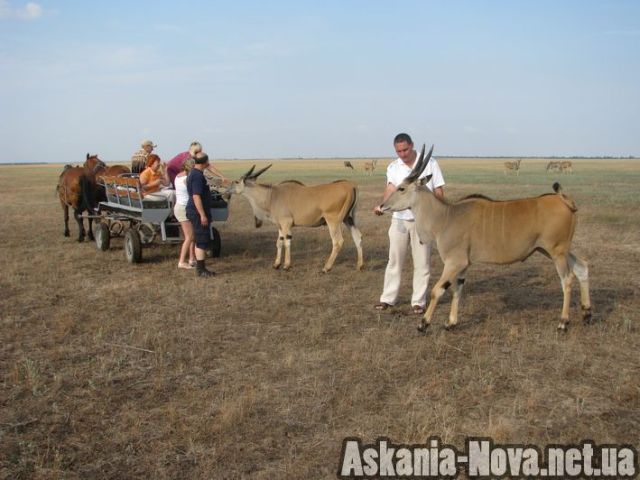
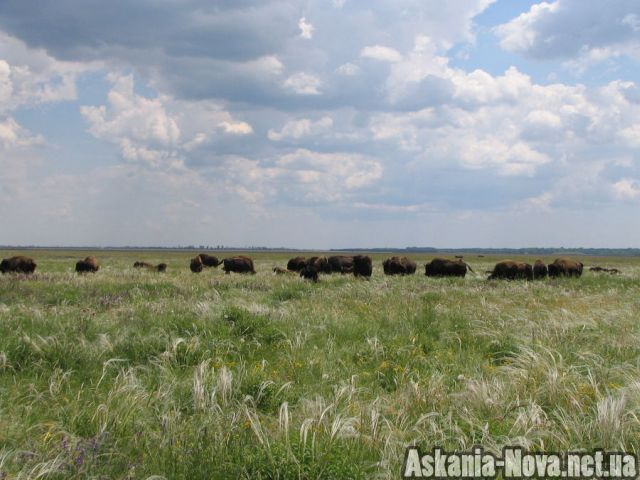
Photographic safaris by wagon to herds of ungulates grazing semi-wild in the protected steppe are the most popular. Its landscapes remind travelers of the North American prairies with bison, the Serengeti plains with canna antelopes, gnu, Chapman’s zebras, the Dzungarian Gobi with Przewalski’s horses, kulans or the boundless Kazakh steppes with fast-footed saigas. All this, especially in spring and fall, is complemented by flocks of birds, creating an inexpressible emotional state.
The history of the foundation and further development of the Askania Nova Biosphere Reserve serves as an excellent example of how to inscribe one’s name in the history of mankind, just as Friedrich Falz-Fein, who was unforgotten by his grateful descendants, did.