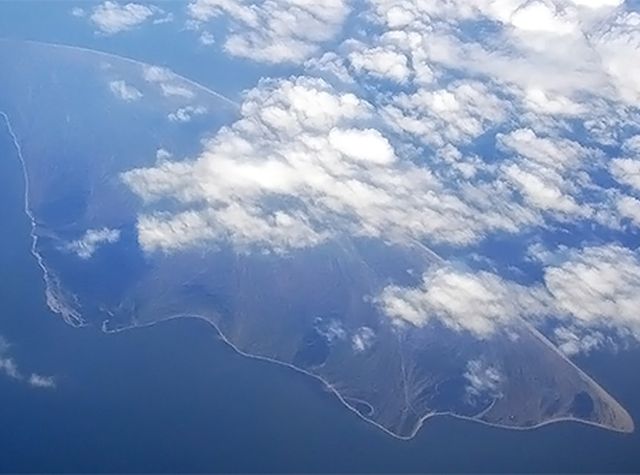
 Providing the status of a reserve to the territories of the Prisivash-Priazov Lowland and Prisivash-Krym Lowland and their water areas alarmed nature conservationists already at the end of the XIX century, when their active economic development began.
At the end of the 20s of the last century wide complex researches were started here, and in 1923 Churyuk Island, located on the central Sivash, was attached to the single at that time reserve in the south of Ukraine «Askania-Nova». In July 1927 the reserve «Nadmorskie Spits» was created at the reserve «Askania-Nova» (in January 1933 it became an independent reserve), it included, in addition to the areas of the northern Black Sea coast, the areas of Sivash and the coast of the Sea of Azov. Later (in July 1937) on its basis were organized two state reserves: Black Sea and Azov-Sivash. 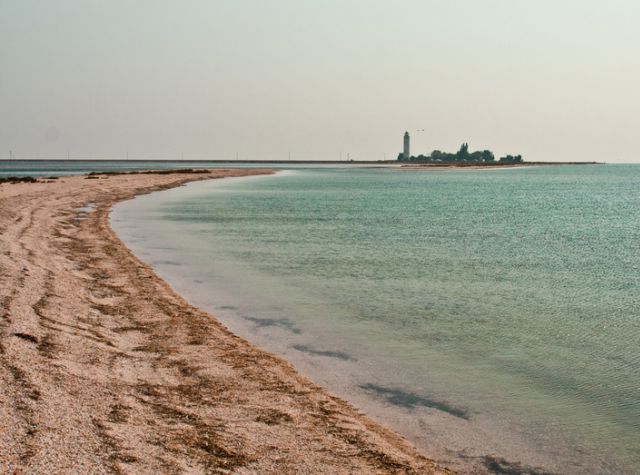 Reorganization of the Azov-Sivash reserve into the Azov-Sivash State Reserve and Hunting Farm as part of the island of Biryuchy and four other islands. Biryuchy and four more islands of the Central Sivash: Kuyuk-Tuk and Churyuk, Martynyachy and China, was made 20 years later. The water area of the 1-kilometer sea strip around Biryuchy Island and partially the water area around the island was given the status of protected area. Biryuchy Island and partially the water area around other islands.
By the Decree of the President of Ukraine from February 25, 1993 on the basis of the reserve-hunting farm was created Azov-Sivash National Natural Park with the purpose of preservation of nesting birds, flora and fauna, unique natural complexes of the Northern Azov region and for their rational use for scientific, conservation, economic and recreational purposes.
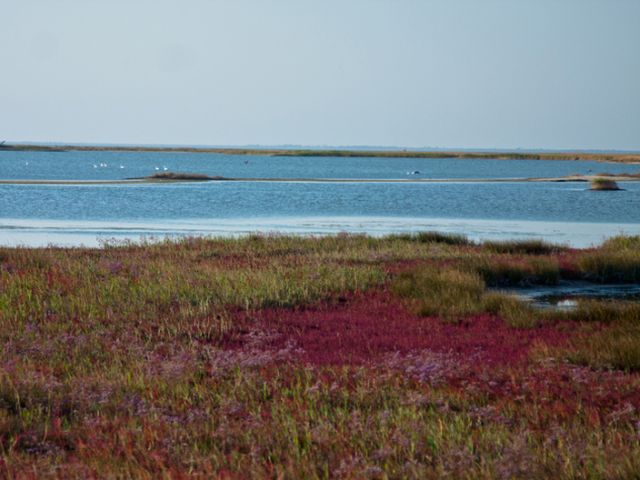 The Prisivash-Priazov region is characterized by certain types of landscapes, which within the park do not have a continuous band of distribution and are of different types. Biryuchy Island together with Fedotova Spit belongs to the type of seaside landscapes and is characterized by modern seaside sandy-shell liman-marine plains with poorly developed sod-arched solonchak soils and solonchaks. A special place in the landscape structure of the island is occupied by landscapes of sea and inland bays.
The central Sivash is a marine bay of brassy type. On its territory there are so-called «droughts» — areas of periodic and permanent waterlogging, which in the waterless state have the appearance of difficult loamy soric solonchaks.
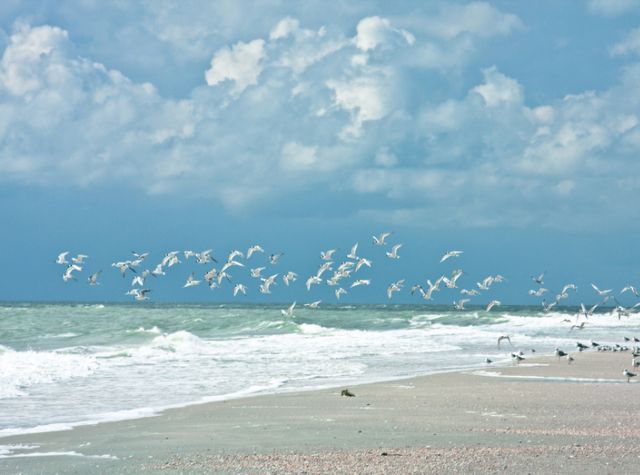 The climate of the park’s territory is moderately continental with sultry long dry summers and relatively short winters with unstable snow cover. The amount of precipitation is insignificant and is the lowest in Ukraine — 260 mm per year. This region is characterized by prolonged droughts with dry spells.
Therefore, in such climatic and soil conditions, relatively poor desert steppe and solonchak vegetation is formed here. There are 308 species of vascular plants growing on the territory of the park. 12 species are included in the Red Book of Ukraine.
The islands of the Central Sivash — Churyuka and Kuyuk-Tuka — are the least subjected to anthropogenic influence, that is why the real steppe phytocenoses are preserved here. 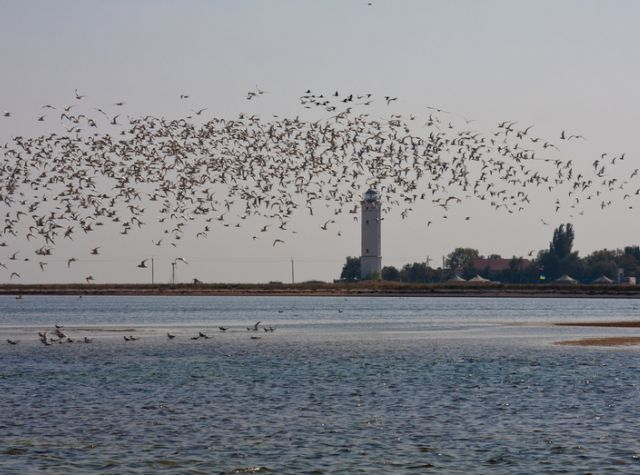 Among them are October Scythian, divo violet, trinia bristly, dry-steppe sage.
Coastal areas of the Azov and Black Seas, especially Sivash with its numerous islands and peninsulas, is a place of nesting concentration for many species of birds. For them, these places are attractive primarily due to their mild climate, rich feeding grounds and well-protected land areas for nesting. For numerous birds, the islands serve as respite and feeding grounds. The so-called «great migratory route» passes through these places.
Back in 1976, the territory of Sivash Bay with a total area of 45,700 hectares together with three others was proclaimed a wetland of international importance. This meant that it became a subject of the Convention on Wetlands of International Importance, mainly as habitat for waterfowl (Ramsar, 1971).
Near the steppes of Prisivashya and on Biryuchy Island, there are strepeth, bustard, crane of steppe and gray, field and steppe harriers, great spotted eagle, golden eagle, balaban, sapsan falcon, and steppe kestrel. In the park there are 30 species of birds listed in the Red Book of Ukraine. The white-tailed eagle and the strepeth are also objects of the European Red List; there may be more than 1% of individuals of the populations of the Red-tailed Goose and Mud-buck, which winter here.
Also on Biryuchy Island there are wonderful conditions for the existence of indigenous species of fauna, 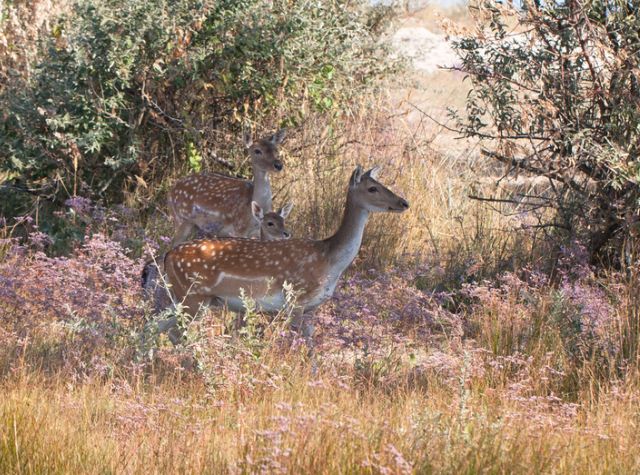 e.g. fox, russak hare, raccoon dog, green toad.
In general, within the park there are over 5 thousand species of animals, among them 250 vertebrates. Among amphibians there are often found the lake frog, among reptiles there are numerous jumping lizard, common and water beetle, variegated lizard. Such fish as: glossa and kalkan flounder, bobyl, leopard and Knipovich’s gobies, Russian sturgeon and Sevryuga sturgeon, as well as recently acclimatized Far Eastern mullet species — Pilengas — are of industrial importance.
In general, the fauna of the park is represented by the following figures: mammals — 17 species, birds — 197, reptiles — 8, amphibians — two species, fish — 26 species, mollusks — 6, spider-like — 3 species, crustaceans — 5 species, ringed worms — 1 species, hydroid polyps — 2 species.
 The park’s animals included in the Red Book of Ukraine: big muskrat, steppe ferret, dolphin-azovka and four-bellied and yellow-bellied dolphin, honey badger, steppe viper, as well as two species of hydroid polyps, one each of ringworms and crustaceans and 5 species of insects, including mantises and (sand empusa and straight-winged iris), webworms (road wasp Cryptocholus reddish and swarming wasp Sis striatus).
At the same time, the poor ornithological complex was at one time the main reason for the establishment of the reserve-hunting farm. The steppe grasses of Biryuchy Island, which is a continuation of Fedotovaya Spit, contributed to the formation of numerous populations of acclimatized red deer, fallow deer, mouflon and kulan.
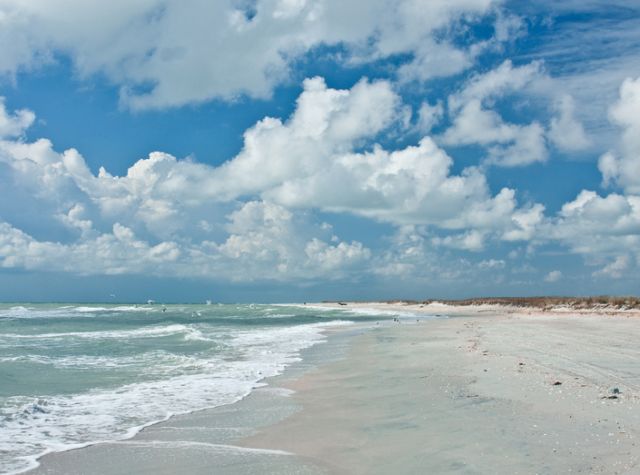 The large area, isolated territory, rich vegetation and fresh water make it possible to use this unique corner of nature for breeding and protection of rare and endangered species of flora and fauna, and for us to plunge into the world of wildlife and enjoy it to the full.